Case study
The call notes that nobody wrote
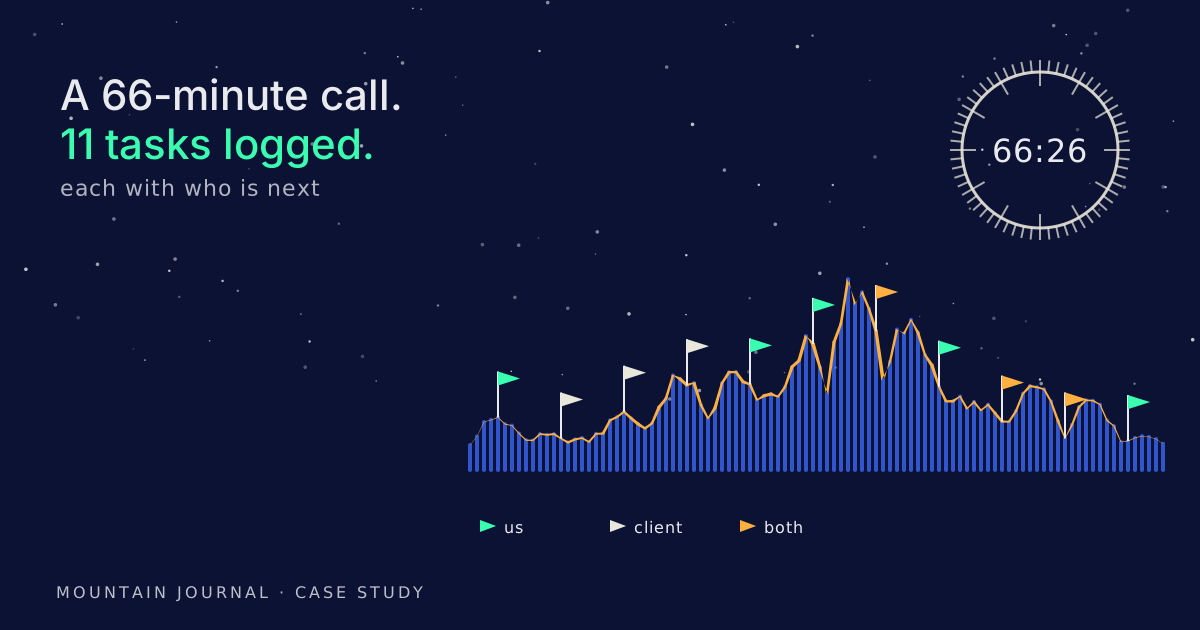
A call with a client lasted 66 minutes, and Kovrin wrote down eleven tasks from it, each with who is next to act. We did not write the notes by hand; transcribing notes was no longer needed.
 Norbert Kovalčínfounder · STENVARD26 September 2026
The problem
After an hour-long call, you have ten things in your head. By the time you write them down, you forget something. Often you do not write them down at all, because another call is coming up shortly.
The other side’s tasks get lost easily. They never make it into your list. Two weeks later, it is hard to work out who was supposed to send what.
Yet the minutes are not bureaucracy. They are the one place where what you agreed is written down.
What we did
Stenvard runs on Kovrin. We only transcribe a call with a client when the client gives consent for it at the start.
Kovrin transcribed the call from 11 August 2026. From the transcript, it wrote a one-paragraph summary and a list of tasks.
The summary states what the parties agreed, what needs to be handled before the next step, and when they will meet again. Anyone who was not on the call can read a single paragraph and know where things stand.
Every task states who is to carry it out. Most also state when: sometimes a date, for example “before 1 October”, elsewhere a link to the next step, for example “before the video call”.
The list is a proposal, not a verdict.
After the call, you go through it and correct anything that is off. But you do not have to write it.
What it gave back
The call lasted 66 minutes. Kovrin wrote down 11 tasks from it.
- All eleven state who is next to act.
- Five tasks were ours, three belonged to the other side, and three belonged to both sides.
- Nine tasks also have a time reference.
- Two are missing a deadline, and Kovrin did not fill one in.
The full transcript stayed in Kovrin with the call record; it runs to more than 52,000 characters. When someone asks a month later exactly what was said, there is no need to rely on memory.
None of us wrote the call notes by hand. We did not measure how many minutes this saved. Transcribing notes was no longer needed, and the other side’s tasks are recorded in the same place as ours.
Six of the eleven tasks belonged to the client or to both sides. Those are in the list too. When it comes up two weeks later who was supposed to send what, the list is at hand.
In an operations audit, we find out where the agreements from your calls end up in your company, and who transcribes them today.
Sources
- Call length, number of tasks, who is next to act, and time references: call record in Kovrin from 11 August 2026, our own measurement.